From Local Innovation to Global Vision: Erasmus Staff Mobility Experience at TU Wien

Written by Gültekin GÜRDAL, Library Director, IZTECH Library

“International engagement transforms local strengths into global perspective.”

TU Wien (Vienna University of Technology) is one of Europe’s leading technical universities, home to around 27,000 students, over 4,000 academics and researchers, and an annual budget exceeding 500 million euros. In 2024, one of its faculty members was awarded the Nobel Prize, further underlining the university’s global academic prestige and impact.

A Journey to Vienna and a Look into the Heart of Open Science

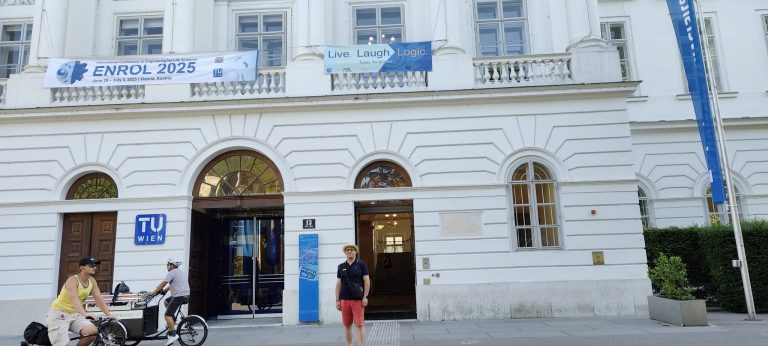
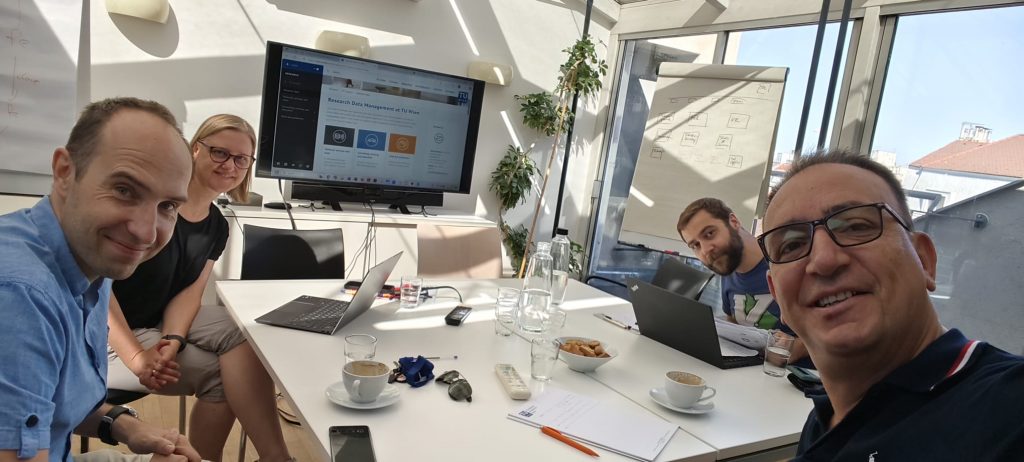
From June 30 to July 4, 2025, I participated in the Erasmus+ Staff Training Mobility program organised for me by this prestigious institution. The program, titled “Library Services and an overview of Research Data Management at TUW,” offered a wealth of content, particularly in terms of open science infrastructures, institutional repository systems, CRIS integration, and data management tools.

CRIS and Institutional Repository Integration

One of the program’s most striking aspects was TU Wien’s integration of its institutional repository with its Current Research Information System (CRIS). This ecosystem enables centralised management of publications, datasets, projects, and theses, enhancing institutional visibility, open access compliance, and performance monitoring.

DAMAP.org: A Smart Approach to Data Management

Another major highlight was DAMAP.org, TU Wien’s open-source Data Management Planning tool. Designed to help researchers create funder-compliant DMPs with ease, DAMAP is modular, customizable, and closely aligned with Austrian and EU research frameworks. Its seamless integration with the CRIS showcases a best practice in institutional data stewardship.

Comparing IZTECH GCRIS with Vienna Systems

Throughout the program, I had the opportunity to compare TU Wien’s infrastructure with our own GCRIS system at Izmir Institute of Technology (IZTECH). While both systems support integrated research output management, TU Wien has more tightly connected data workflows with its CRIS. Conversely, IZTECH GCRIS stood out for its flexible structure, particularly in managing researcher profiles and output richness.

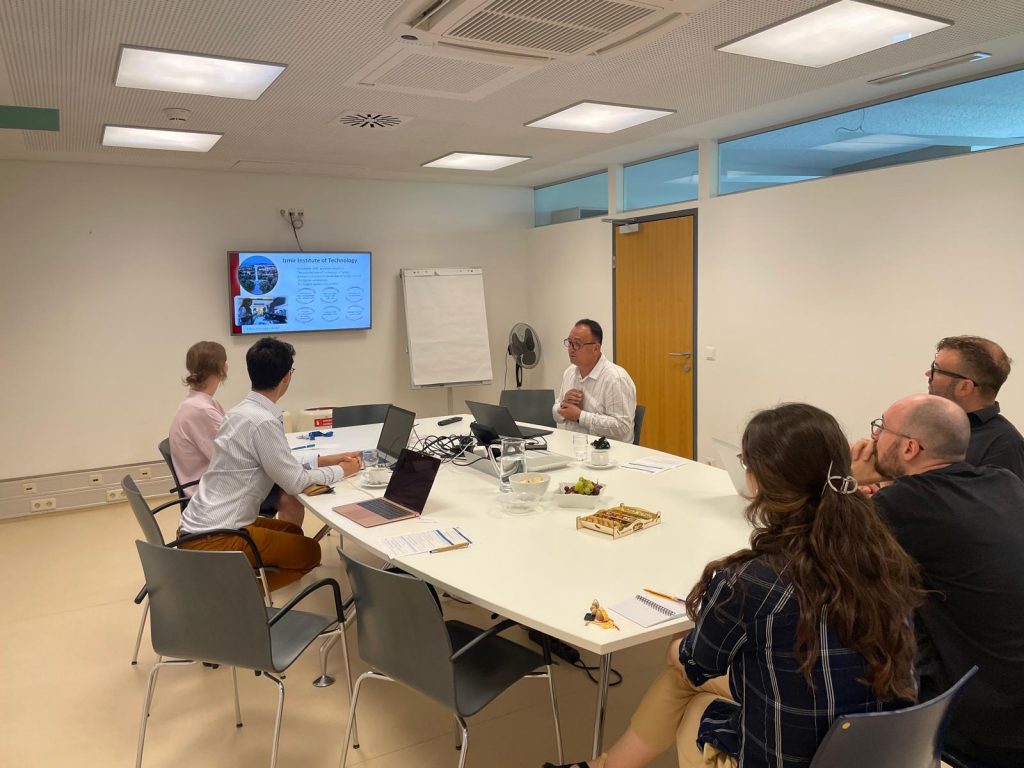
During the training, I also delivered a presentation on IZTECH GCRIS, which received very positive feedback from both participants and TU Wien staff. They were particularly impressed by its alignment with international standards such as the COAR Resource Type Vocabulary and its technical robustness, extensibility, and open science integration.
The Power of International Collaboration: New Visions and Partnerships

Participation in such international programs and institutional exchanges offers more than just knowledge transfer—it provides the opportunity to gain a broader vision by observing different organisational models and research cultures. My experience at TU Wien enriched not only my technical understanding of open science infrastructures but also offered valuable perspectives on research policy, institutional strategy, and academic collaboration. Seeing how our work at IZTECH aligns with global efforts—and identifying areas for future cooperation—was one of the most rewarding aspects of this mobility experience.